
W69 AI Growth
SeatProof

Never sell the same seat twice.

Reach every OTA without losing control of your own inventory. A layer between your ticketing system and the sales channels that guards capacity instead of handing it out.

What it is

A layer of software between your ticketing system and the sales channels. You stay the owner of the inventory; SeatProof only translates the question and guards the answer.

What you do with it

You sell through GetYourGuide, Tiqets, Viator, Musement, Headout and any other channel on the channel manager, without building an integration per channel and without updating numbers by hand every day.

What it gives you

No double-sold seats, no daily handwork, and a guest who simply walks in at the gate. The capacity you release stays the capacity you have.

01The problem

Four things that break the moment you sell through OTAs

An attraction selling through GetYourGuide, Tiqets, Viator, Musement, Headout or any other channel runs into the same wall. The channel wants to know what is free at any moment, wants to hold seats before the guest pays, and wants to be able to cancel. Ticketing systems were not built for that.

01

Your ticketing system has no concept of a hold

A channel manager holds first and confirms only after the channel has taken the money. Most ticketing systems only know sold. That in-between state has to live somewhere, or you sell the same seat again while the guest is paying.

02

Several products draw from one pool

Entry, entry with rental, a senior rate: they often share the same capacity. The ticketing system records that link nowhere, and the channel manager can express only one number per time slot.

03

The availability you read is behind

We measured a ticketing system taking about two minutes to update its availability. On a quiet day you never notice. On the last tickets of a busy evening it is the difference.

04

The specification is not always right

Three fields the documentation calls optional are in fact refused by the channel manager. You do not find that by reading. Only by running into it.

02In one picture

Five channels that do not know about each other

Every channel asks what is free and gets the same answer. Nobody counts what the others have already sold. That is how a room for two thousand gets sold five times.

Without the bridge, five channels together offer 10,000 seats where there are 2,000. With it, they draw from one pool of 2,000.
This is not a worked example. On 14 October 2026 our own bridge offered six thousand seats where there were two thousand, because each product had been given its own pool. Measured, corrected, and pinned down in a test.
03The solution

One layer in between, and the control stays with you

Your ticketing system stays in charge of the inventory. Which ticketing system you run and which channel manager you sell through changes nothing about that layer. Only the translation on either side differs.
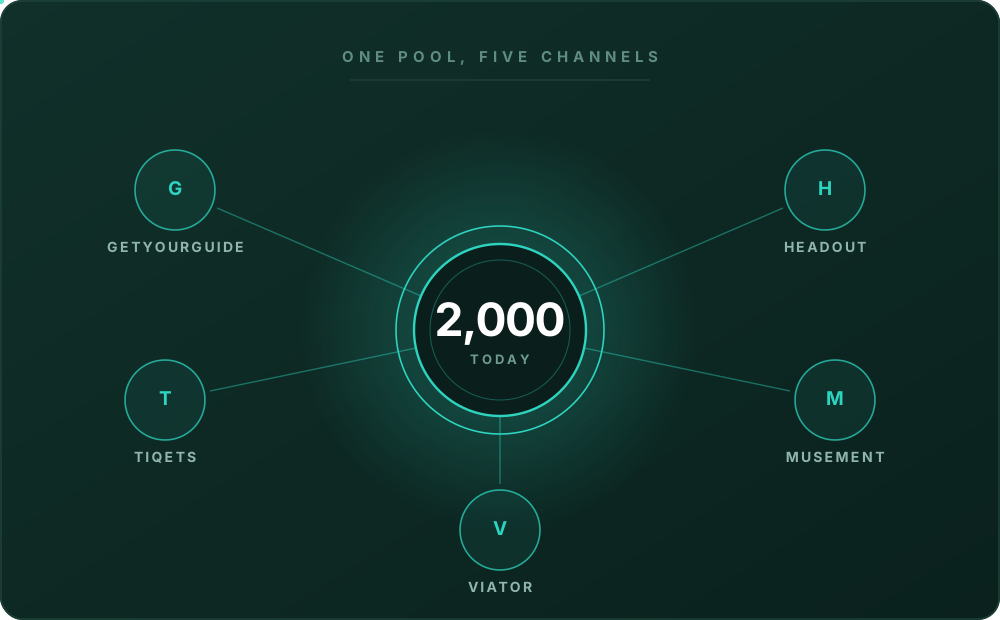
Five sales channels all drawing from one capacity pool of 2,000

Availability index

Refreshed every minute, so a question is answered in milliseconds instead of waiting on your ticketing system.

Reservation ledger

The state between holding and confirming. Expired holds release themselves.

Capacity pools

Products sharing the same seats are guarded together. Sold is sold, whichever product or channel it went through.

Catalogue and import helper

Reads your events and shows what it would link before it writes anything, with the reason for everything it leaves out.

Admin screen

See per day and time slot exactly what the channels are being told, with a safety margin as a handbrake.

Monitoring

An alert on the phone for stale stock, failed bookings or an unreachable database. Not afterwards in a log file.

If the ticketing system gives no unambiguous answer, the bridge refuses the booking rather than guessing.

A refused booking costs a few euros of margin. A guest standing at a closed door costs a review that stays up for a year. That is not a setting switched on later.

04Evidence

Not designed but built

In production since October 2026 at a Dutch attraction with two venues. These numbers were measured on that production environment.

101
days on sale, drawn from 30 separate events
2
listings at the sales channel, instead of a hundred
5
sales channels connected today, through one integration
58
automated tests, including concurrent bookings on the same seat
<80 ms
response time of the bridge itself, measured in production
05Approach

How a connection goes

01

Introduction and inventory

Which ticketing system you run, how your capacity is organised, which channels you want to reach. An hour of conversation, at no cost and without obligation.

02

Configuration plan

On paper: which product belongs to which channel and what you need to switch on in your own system. You can steer that before a line of code is written.

03

Connection on a test environment

With a real test booking and a real cancellation, so you see it work before a paying guest is involved.

04

Live, and through the season

Monitoring, one point of contact, and standby during the weeks that matter.

06Working together

Who you are dealing with

Denis Wortelboer

Denis Wortelboer, AI Architect and owner of W69 AI Growth. The person you talk to is the person who builds it. No account manager in between, no handovers where knowledge disappears.

Building it yourself is possible. Expect months, and the kind of weeks where you discover that three fields the documentation calls optional are in fact required. That groundwork is already done here.

ISO/IEC 27001:2022 certified for information security, valid until 2029
07Knowledge base

Read the whole story

The full proposition as a pdf: what breaks the moment you sell through OTAs, how the layer in between works, what was measured in production, and how an integration runs. Six pages, no form.

SeatProof · the proposition pdf · 6 pages · October 2026 Download the pdf
08Questions

What people ask first

If your question is not here, send it over. Answer within a day.

What exactly is SeatProof?
A bridge between a ticketing system and the sales channels, running on our own servers. The sales channel asks SeatProof what is free, holds seats, and confirms only after the guest has paid. SeatProof translates that to your ticketing system and guards along the way that no more is released than exists.
Do I have to replace my ticketing system?
No. Your ticketing system stays in charge of the inventory and of the tickets. SeatProof sits beside it and reads what is already there. Nothing moves to another system.
Which ticketing systems are supported?
The layer itself is independent of your ticketing system; only the translation on your side differs per system. The first integration has been running on Paylogic since October 2026. For every next system we add that one translation layer.
And which sales channels?
Anything selling through a channel manager. In the current setup that is GetYourGuide, Tiqets, Viator, Musement and Headout, but five is not a limit: adding a channel is a tick box at the channel manager, not a new integration. You build one connection, however many channels sit behind it.
How does it stop me selling the same seat twice?
Products sharing the same space are guarded together in one capacity pool. Sold is sold, whichever product or channel it came through. On top of that there is a reservation ledger for the state between holding and confirming, which most ticketing systems do not have.
How current is the availability the channels see?
It is refreshed every minute and answered from our own index, so a question comes back within tens of milliseconds. That is deliberate: we measured a ticketing system needing about two minutes to update its own availability, and a sales channel does not wait for that.
What happens if something goes wrong during a booking?
If the ticketing system gives no unambiguous answer, SeatProof refuses the order instead of guessing. A refused order costs a few euros of margin; a guest in front of a closed door costs a review that stays up for a year.
How long does an integration take?
Count on weeks, not days. It starts with an inventory and a configuration plan on paper, then a bridge on a test environment with a real test booking and cancellation, and only then live. If you want to be live before the season, start well before it.
Who has access to my data?
W69 AI Growth is ISO/IEC 27001:2022 certified for information security, valid until 2029. No guest data goes to sales channels that should not have it, and the bridge stores no more than is needed to find a booking back and cancel it.
Can I hold seats back for my own box office?
Yes. Per day and time slot you can set a safety margin. It is subtracted from the number the channels are shown, so you always keep room for sales at the door.
09Contact

The first step is a small one

Send me the name of your ticketing system and the channels you want to reach. I will tell you within a day whether it can be done, roughly what it takes, and where the snags are in your case. Nothing is committed.

A connection takes weeks, not days. If you want to be live before the season, start well ahead of it.